
Doctorat : employabilité et compétences doctorales

Bastien Marguet - Ambassadeur du doctorat AURA

My website

Lundi 29 juin 2026

I. Introduction

Who here is already planning to leave academia in the next few years?

Not only an academic path - France at 3 years

France - 3 years after graduation (MESR-SIES, 2025)
Sector

Public Research

48%
Sector

Private Research (R&D)

26%
Sector

Outside Research

26%

Source: MESR-SIES, Note Flash 2025-16.
Only about one PhD out of two is working in academia three years after graduation.

Sciences humaines et sociales - France à 3 ans

Secteur d'emploi 3 ans après la thèse
Secteur
Humanités
Sciences de la société
Recherche publique (académique)
55.2%
53.8%
Secteur public hors académique
25.8%
19.1%
R&D privée
8.2%
9.7%
Privé hors R&D
10.8%
17.4%

Source : MESR-SIES, Note Flash 2025-16.

En SHS aussi, la recherche académique ne résume pas les carrières doctorales.

STS - Sciences, technologie, santé - France à 3 ans

Secteur d'emploi 3 ans après la thèse
Domaine (SIES)
Recherche publique
R&D privée
Hors recherche
Sciences fondamentales et applications
43.7%
37.9%
18.4%
Sciences de la vie et de la santé
48.2%
28.7%
23.1%
Sciences et technologies de l'information et de la communication (STIC)
31.8%
54.0%
14.2%

Source : MESR-SIES, Note Flash 2025-16.
L'équilibre entre recherche publique, R&D privée et autres secteurs dépend fortement de la discipline.

Why does this look different across Europe?

R&D spending and PhD employment profile
Country group

Sweden / Germany

R&D spending (% GDP)
~3.1% to 3.6%

Strong integration into deeptech and industry

Reference point

France

R&D spending (% GDP)
~2.2%

Hybrid model with strong public support via the Research Tax Credit

Country group

Italy / Spain

R&D spending (% GDP)
~1.4% to 1.5%

Stronger dependence on public funding, weaker private absorption

A PhD career is also shaped by national structures.

PhD Ambassador: what is the role?

Represent

Share concrete doctoral career paths and make PhD trajectories more visible.

Translate

Help explain what doctoral training develops beyond technical expertise.

Connect

Build bridges between doctoral candidates, institutions, employers and society.

The ambassador role is part of a national effort to improve the understanding, recognition and professional visibility of the doctorate.

A mission of visibility, translation and connection.

Who I am

Profile
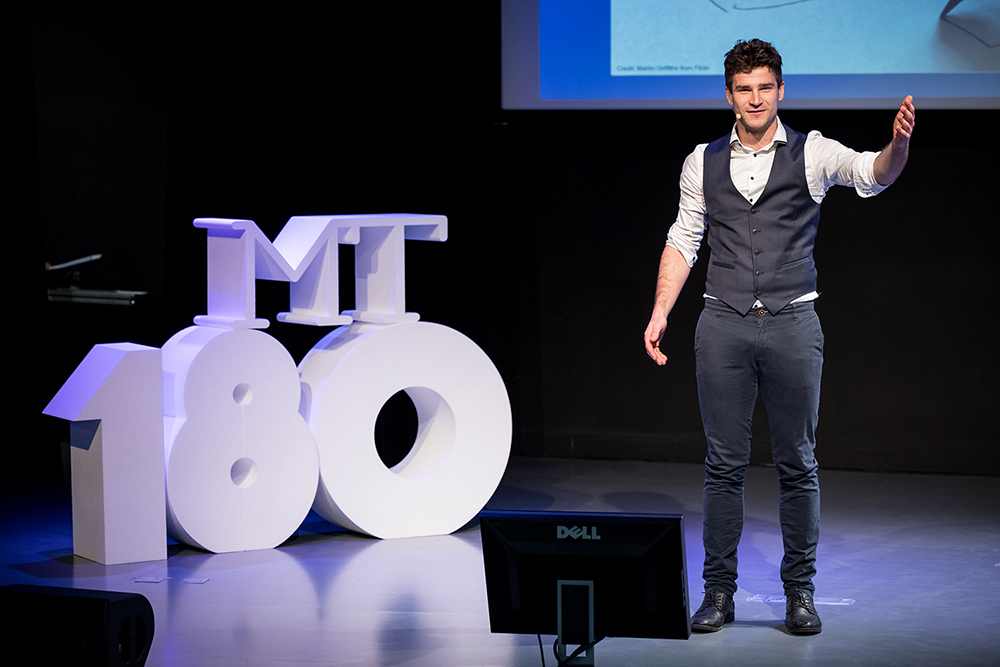
Bastien Marguet speaking on stage during MT180.
Background

PhD in Statistical Physics
Langevin models applied to 2D materials

Current position

Lecturer at the University of Lyon (Maths/Physics)

Teaching / outreach

Workshops on scientific communication
PhD Ambassador AURA

Main directions

Scientific communication from a linguistic perspective
Teaching initiatives, and how to deal with AI in education

Science, communication, education.

The national doctorate platform

Information

Centralize reliable information about doctoral training and career opportunities.

Orientation

Help candidates, doctoral researchers and employers understand what a doctorate is.

Visibility

Make doctoral skills, testimonials and resources easier to find and share.

A common entry point for making the doctorate more readable.

European PhD Day

First edition

13 May 2026 - first European PhD Day, to be renewed every year.

Celebrate

Show the diversity of doctoral paths and the people behind them.

Connect

Create a shared moment between PhD candidates, doctors, institutions and partners.

Value

The doctorate is not only a national issue: its recognition, mobility and employability are also European questions.

European PhD Day visual.
A European moment to make the doctorate visible.

The main question

If you had to leave academia tomorrow, what would you be able to sell and how?

II. Survey

Join the live word cloud

Join the word cloud, then answer with short keywords.

Join the live word cloud

Join the word cloud, then answer with short keywords.

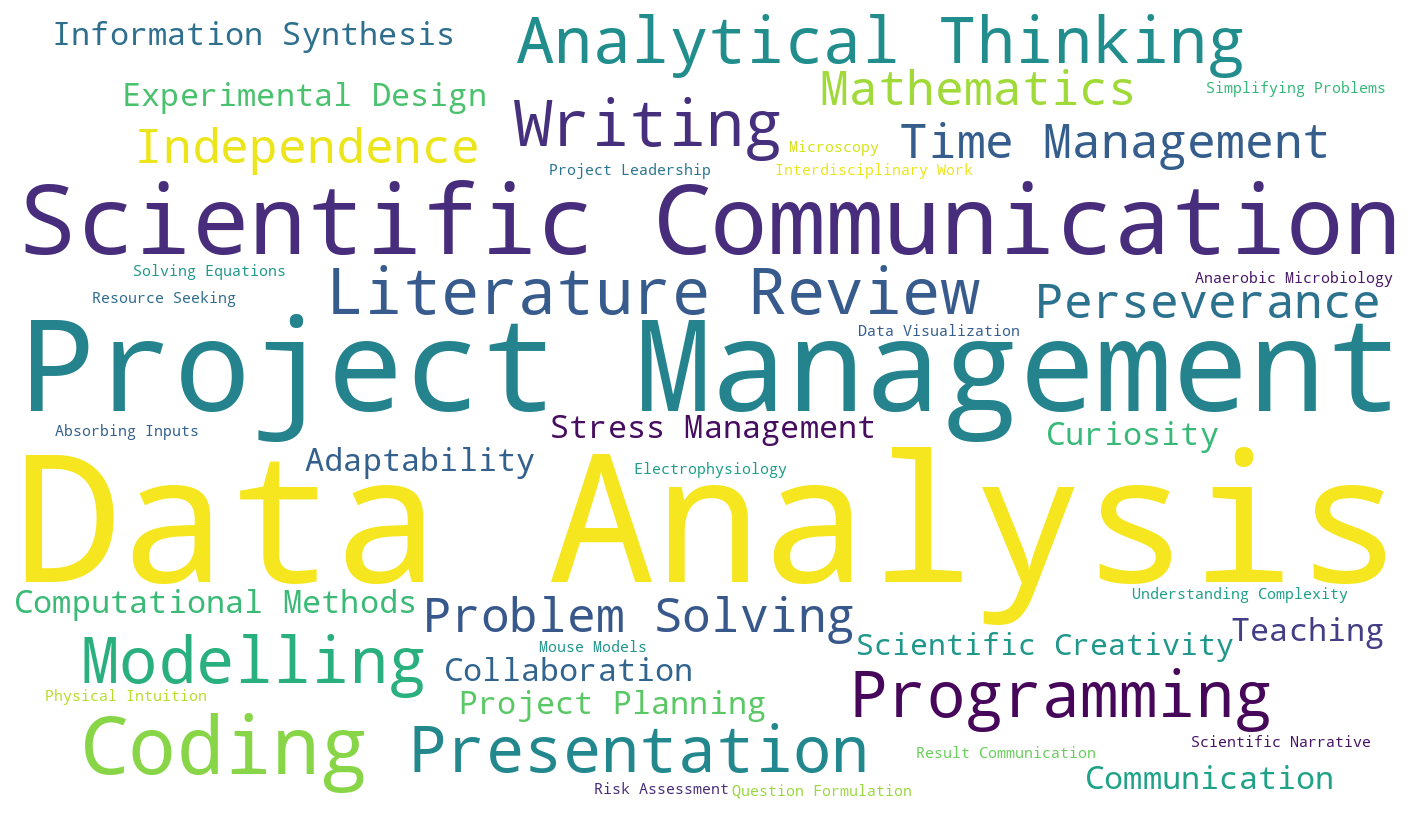
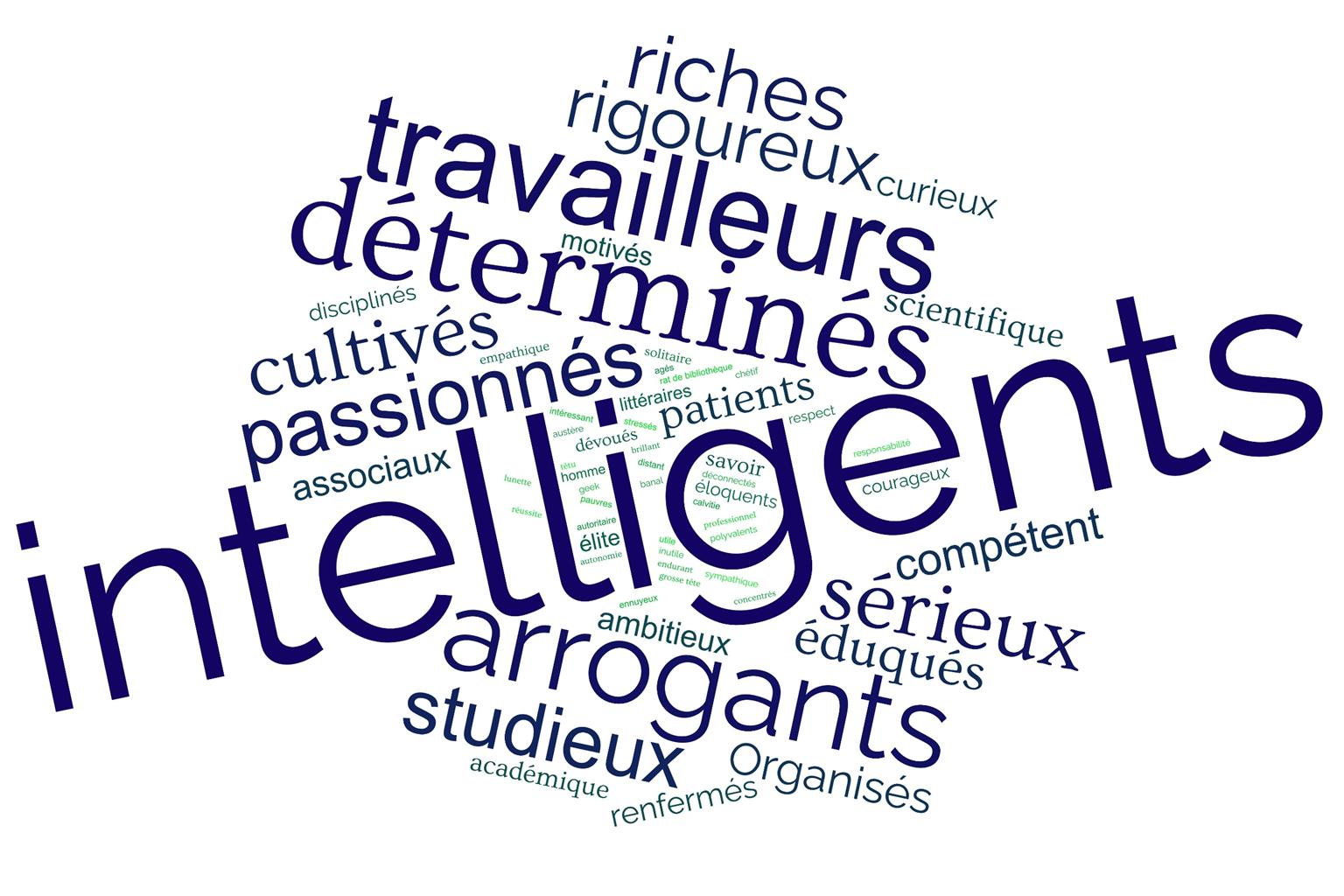
Results from Cargèse (40 participants)

Overview of the skills named by participants.
Skills are clearly present.

Join the live word cloud

Join the word cloud, then answer with short keywords.

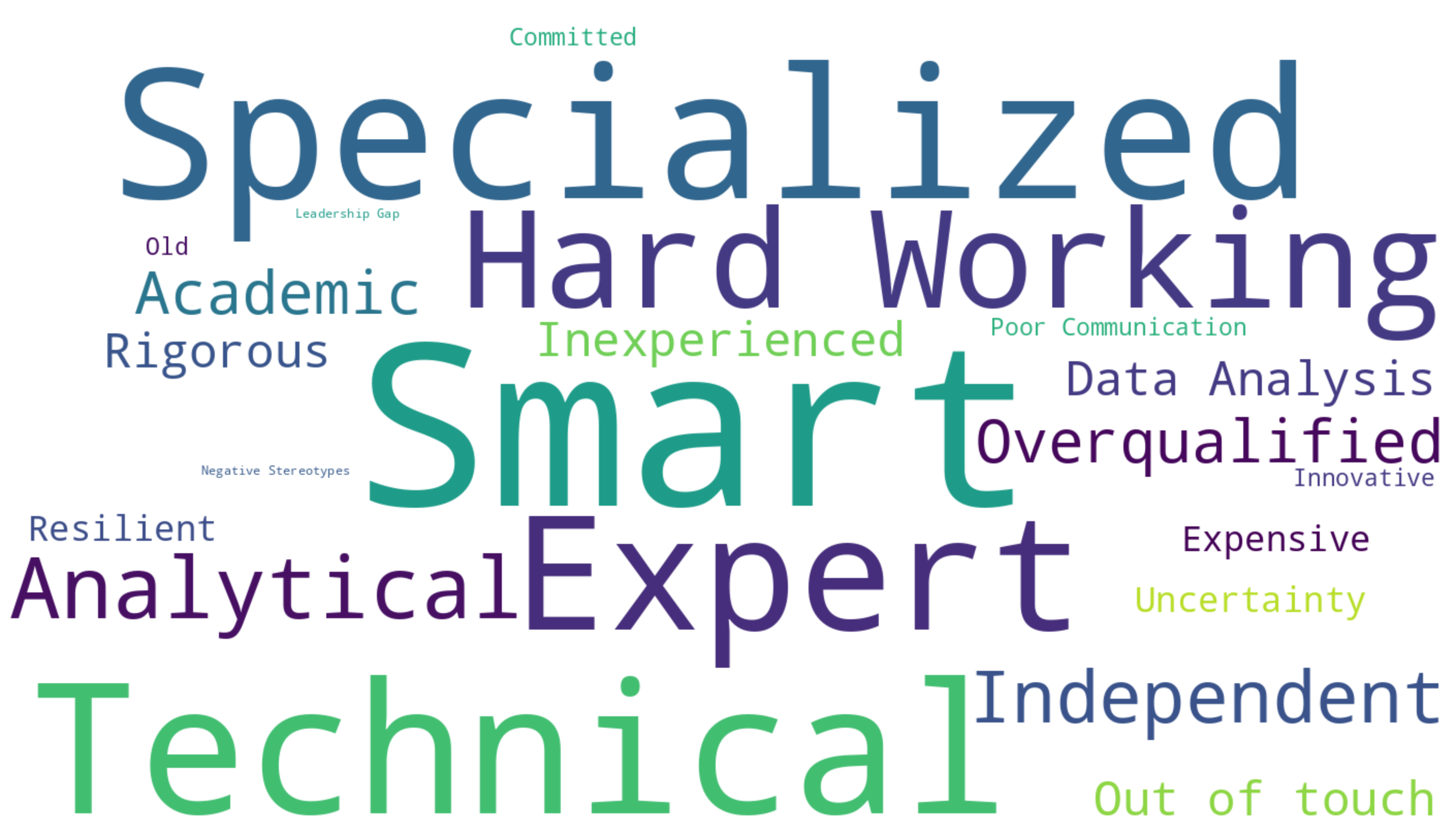
Results from Cargèse (40 participants)

Overview of how participants think recruiters see PhD holders.
The imagined recruiter view mixes strong competence with doubts about fit.

III. What The Data Says

How social judgment works

You are not judged only on how smart you are.

Occupational stereotypes: warmth and competence

Occupational stereotypes: warmth and competence 2.3 2.8 3.3 3.8 4.3 4.8 2.3 2.8 3.3 3.8 4.3 4.8 Competence Warmth

Occupational stereotypes: warmth and competence

Occupational stereotypes: warmth and competence 2.3 2.8 3.3 3.8 4.3 4.8 2.3 2.8 3.3 3.8 4.3 4.8 Competence Warmth Staff nurse Assistant nurse

Occupational stereotypes: warmth and competence

Occupational stereotypes: warmth and competence 2.3 2.8 3.3 3.8 4.3 4.8 2.3 2.8 3.3 3.8 4.3 4.8 Competence Warmth Staff nurse Assistant nurse Preschool teacher

Occupational stereotypes: warmth and competence

Occupational stereotypes: warmth and competence 2.3 2.8 3.3 3.8 4.3 4.8 2.3 2.8 3.3 3.8 4.3 4.8 Competence Warmth Staff nurse Assistant nurse Preschool teacher High school teacher

Occupational stereotypes: warmth and competence

Occupational stereotypes: warmth and competence 2.3 2.8 3.3 3.8 4.3 4.8 2.3 2.8 3.3 3.8 4.3 4.8 Competence Warmth Staff nurse Assistant nurse Preschool teacher High school teacher Surgeon

Occupational stereotypes: warmth and competence

Occupational stereotypes: warmth and competence 2.3 2.8 3.3 3.8 4.3 4.8 2.3 2.8 3.3 3.8 4.3 4.8 Competence Warmth Staff nurse Assistant nurse Preschool teacher High school teacher Surgeon Engineer

Occupational stereotypes: warmth and competence

Occupational stereotypes: warmth and competence 2.3 2.8 3.3 3.8 4.3 4.8 2.3 2.8 3.3 3.8 4.3 4.8 Competence Warmth Staff nurse Assistant nurse Preschool teacher High school teacher Surgeon Engineer Researcher

Occupational stereotypes: warmth and competence

Occupational stereotypes: warmth and competence 2.3 2.8 3.3 3.8 4.3 4.8 2.3 2.8 3.3 3.8 4.3 4.8 Competence Warmth Salesperson Chef Store manager Warehouse worker Assistant accountant Cleaning staff Mechanic Accountant Carpenter Heavy machinery operator Office assistants and secretaries Truck driver Systems and software developer Restaurant waiting staff Personal assistants Staff nurse Assistant nurse Preschool teacher High school teacher Surgeon Engineer Researcher

Where PhDs tend to stand

Occupational stereotypes: warmth and competence 2.3 2.8 3.3 3.8 4.3 4.8 2.3 2.8 3.3 3.8 4.3 4.8 Competence Warmth Salesperson Chef Store manager Warehouse worker Assistant accountant Cleaning staff Mechanic Accountant Carpenter Heavy machinery operator Office assistants and secretaries Truck driver Systems and software developer Restaurant waiting staff Personal assistants Staff nurse Assistant nurse Preschool teacher High school teacher Surgeon Engineer Researcher
PhDs likely fit this pattern, but we still need direct data.

LID

Interdisciplinary doctoral lab
Visual identity of the LID interdisciplinary doctoral lab.
Name

Laboratory of Interdisciplinary studies on the Doctorate

About

Founded by Adoc Talent Management in 2021.

Research presented here

Part of the PhD work of Nicolas Lopes.

Portrait of Nicolas Lopes.

Nicolas Lopes
PhD candidate

LID: Laboratory of Interdisciplinary studies on the Doctorate - research presented here includes work by Nicolas Lopes.

The experiment

Question asked

"In your opinion, how do people in general perceive PhD holders?"

Population

267 participants

Composition

103 PhD
164 non-PhD

Study material
Visual used in the study about how PhD holders are perceived.

Visualization of 669 responses provided by 164 participants.

Source: Lopes & Bran, 2026

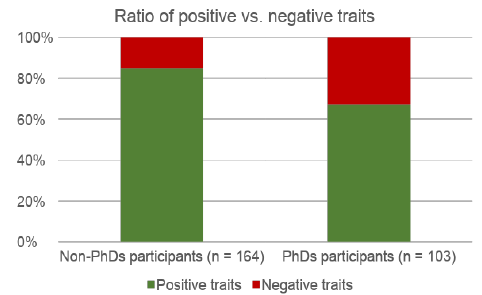
What is the ratio of positive vs negative traits?

The perception gap

Positive vs. negative traits
Bar chart comparing positive and negative traits attributed to PhDs by non-PhDs and PhDs.
  • PhDs attribute about 20% more negative traits to PhD holders than non-PhDs do

Source: Lopes & Bran, 2026

We underestimate how others see us.

But what happens when the judgment comes from recruiters?

Recruiter-side protocol

Sample

189

Recruiters

Candidate profiles

Engineer
PhD holder

Roles evaluated

Technical Lead - execution & problem-solving (1)
Head of R&D - strategic and organizational leadership (2)

Fields

Chemistry
Materials Science

Source: Lopes & Bran, 2026

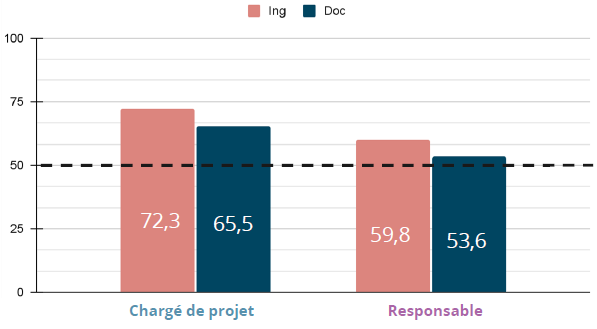
Do recruiters prefer PhDs or engineers?

When perception affects employability

  • In hiring situations, engineers are slightly preferred
  • Not due to competence, but perceived fit
  • There is an observable gap against PhDs
Hiring preference gap
Bar chart comparing how engineers and PhDs are rated in employability.

Share of recruiters (%) willing to hire an engineer or a PhD, by role
(1) Technical lead
(2) Head of R&D

Source: Lopes & Bran, 2026

You do not lose on ability, you lose on perception.

IV. The Paradox

The paradox

You feel confident about your skills
But you doubt your employability

Your competence is recognized
But you expect negative judgments

You are trained to solve complex problems
But you struggle to explain your value

  • High competence, low perceived fit
  • Strong skills, weak translation
  • Confidence in ability, uncertainty in positioning
You struggle to make your value visible.

V. Reconstruction

Exercice - Répondre en 3 phrases

Pour éviter la surcharge, expliquez un concept en répondant à 3 questions simples :

WHAT - Phrase 1

Qu'est-ce que c'est ?

HOW - Phrase 2

Comment cela fonctionne ?

WHY - Phrase 3

Pourquoi c'est important pour moi ?

Trois phrases obligent à clarifier.

Exemple : alimentation

WHAT - Qu'est-ce que c'est ?

L'alimentation est la façon dont les organismes vivants obtiennent et utilisent la nourriture.

HOW - Comment cela fonctionne ?

Les aliments apportent des nutriments et de l'énergie, que le corps transforme pour fonctionner, grandir et se réparer.

WHY - Pourquoi c'est important pour moi ?

Parce que ce que je mange influence ma santé, mon énergie et ma capacité à apprendre ou à travailler.

Une structure simple rend l'idée lisible.

À vous : entraînement en 3 phrases

Choisissez un mot-clé, puis formulez une réponse courte avec la structure WHAT / HOW / WHY.

Doctorate summer school Mémoire Métaphore Gastronomie
Un mot-clé devient clair quand il devient une mini-explication.

Correction : doctorate summer school

WHAT - Qu'est-ce que c'est ?

Une doctorate summer school est une formation de courte durée destinée aux doctorants.

HOW - Comment cela fonctionne ?

Elle rassemble des participants autour d'ateliers, de conférences et d'exercices pratiques pour développer des compétences scientifiques ou professionnelles.

WHY - Pourquoi c'est important ?

Parce qu'elle crée un espace pour apprendre vite, rencontrer d'autres chercheurs et prendre du recul sur son doctorat.

Correction : mémoire

WHAT - Qu'est-ce que c'est ?

La mémoire est la capacité à conserver, organiser et réutiliser des informations ou des expériences passées.

HOW - Comment cela fonctionne ?

Elle s'appuie sur l'encodage, le stockage et la réactivation d'informations, souvent renforcés par l'attention, l'émotion ou la répétition.

WHY - Pourquoi c'est important ?

Parce qu'elle permet d'apprendre, de prendre des décisions et de donner du sens à ce que nous vivons.

Correction : métaphore

WHAT - Qu'est-ce que c'est ?

Une métaphore est une façon d'expliquer une idée en la reliant à une autre image plus concrète.

HOW - Comment cela fonctionne ?

Elle transfère des caractéristiques d'un domaine connu vers un domaine plus abstrait ou plus difficile à comprendre.

WHY - Pourquoi c'est important ?

Parce qu'elle peut rendre une explication plus claire, plus visuelle et plus facile à retenir.

Correction : gastronomie

WHAT - Qu'est-ce que c'est ?

La gastronomie est l'art de comprendre, préparer et apprécier l'alimentation comme une expérience culturelle et sensorielle.

HOW - Comment cela fonctionne ?

Elle combine des techniques culinaires, des produits, des savoir-faire et des codes sociaux pour transformer un repas en expérience.

WHY - Pourquoi c'est important ?

Parce qu'elle influence notre rapport au goût, à la santé, à la culture et aux manières de vivre ensemble.

Objectif : expliquer sa thèse en 3 réponses

Votre interlocuteur doit comprendre le sujet, la logique et l'intérêt de votre recherche en trois réponses courtes.

WHAT

Quel est mon sujet ?
Nommer le problème ou l'objet de recherche en langage simple.

HOW

Comment je l'étudie ?
Dire la méthode, le terrain, les données ou l'approche.

WHY

Pourquoi c'est important ?
Relier la recherche à un enjeu scientifique, professionnel ou social.

Au final, l'explication ne doit pas prendre plus de 30-40 secondes.

Identifier votre valeur : partez d'une expérience

Arrêtez de décrire votre thèse. Commencez à décrire votre impact.

Pensez à une difficulté que vous avez rencontrée pendant votre doctorat.

Question 1

Quel était le problème ?

Question 2

Qu'avez-vous fait ?

Question 3

Quel a été le résultat ?

Travail individuel - 2 minutes

Ne partez pas de vos compétences. Partez de ce que vous avez vécu.

Transformez cette expérience en valeur

Vos questions

Quelles compétences avez-vous mobilisées ?

Qu'est-ce que cette expérience prouve sur vous ?

1. Expérience

Un protocole expérimental ne fonctionnait pas.

2. Compétences
Résolution de problème Adaptabilité Analyse
3. Valeur

Je suis capable de faire progresser un projet malgré l'incertitude.

Format : 4 minutes en binôme. Expliquez l'expérience, puis nommez la valeur qu'elle rend visible.

What a PhD really develops

Skill
Critical thinking
Skill
Problem framing
Skill
Project management
Skill
Autonomy
Skill
Data analysis
Skill
Literature review
Skill
Experimental design
Skill
Learning fast
Skill
Decision-making under uncertainty
Skill
Priority setting
Skill
Scientific writing
Skill
Oral communication
Skill
Teaching & mentoring
Skill
Collaboration
Skill
Translating complexity
Skill
Resilience
You already developed more than you usually say.

Go one step further: which problems can you solve?

Objective: change the reasoning completely.

Companies don't buy skills.
They buy solutions to their problems.

Company needs...
You bring...
Reduce uncertainty
Scientific reasoning
Accelerate innovation
Research methodology
Manage complexity
Long-term project management
Explain difficult ideas
Scientific communication
Improve decisions
Data analysis
Translate your skills into problems you can help solve.

One rule

If you cannot say it simply, you cannot sell it.

VI. Conclusion

What should remain

  • Start by rethinking your own perception of the PhD
  • Academia is a valuable path, but not the only one
  • Wherever you go, your PhD has value, learn how to name it
  • You must think about what skills you want to develop, to be able to develop them